
Five pillars.
None optional.
Sequential, not modular. Each pillar compounds the next. Skip one and the entity-graph footprint collapses.
The five pillars behind the BE THE ANSWER® method.
Five pillars — one system
Every pillar has a job.
Every job is non-negotiable.
Together they form a compounding entity-graph footprint that AI answer engines learn to trust.
Select a pillar to trace how it reinforces the others. Sequential and compounding — none optional.
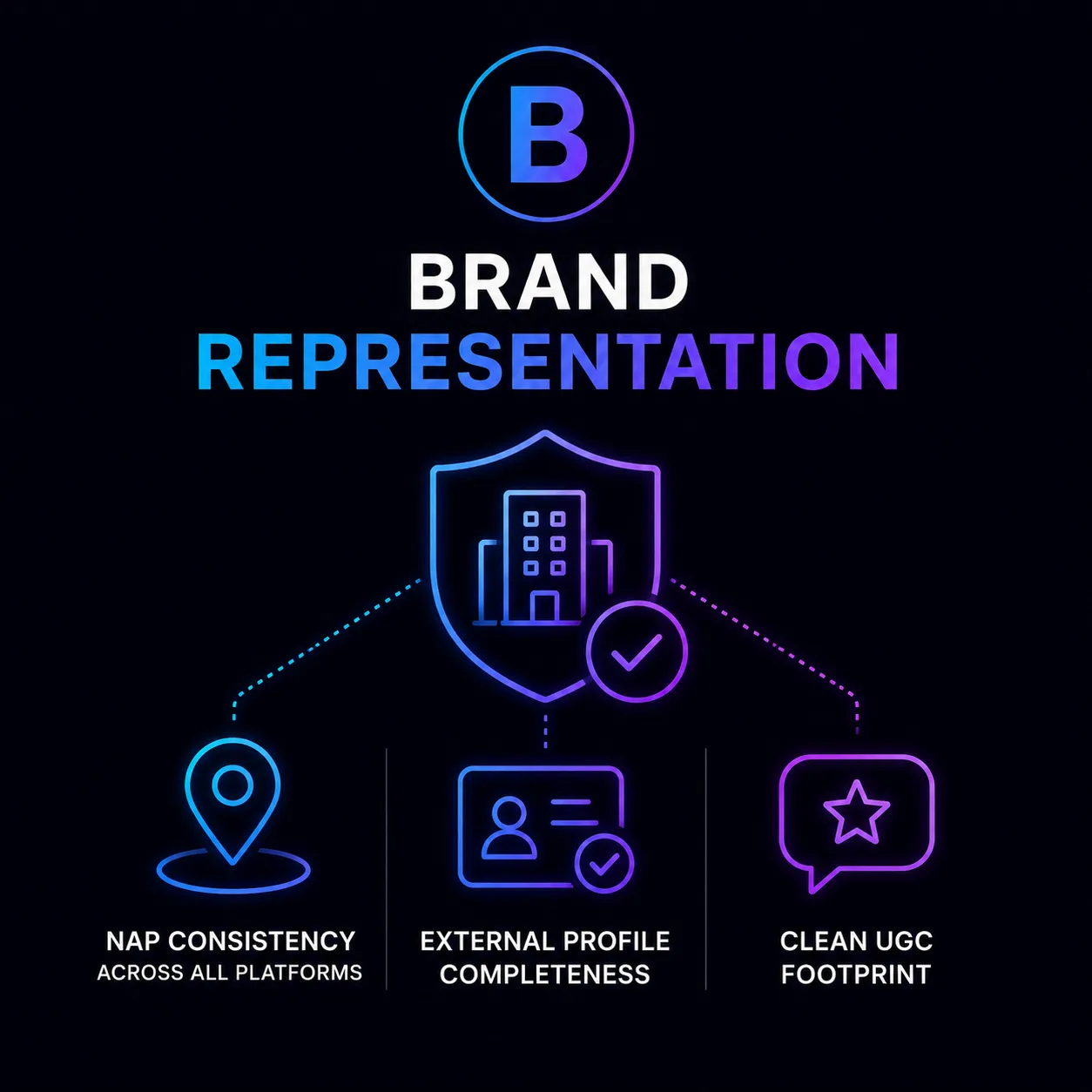
Brand Representation
The baseline machines verify first.
A verified entity gives Research a clean, unambiguous signal to measure against.
Brand Representation
Make sure AI clearly understands who you are and what you do.
AI models don't read your website like humans do — they map entities and relationships. Brand Representation is about structuring your digital footprint so that AI engines clearly understand who you are, what you do, and who you serve. NAP consistency, external profiles, and a clean UGC footprint form the foundation. Without it, the machine has no entity to verify. Without entity verification, you don't exist in the answer set.
- NAP consistency across all platforms
- External profile completeness
- Clean UGC footprint
- Entity definition and disambiguation
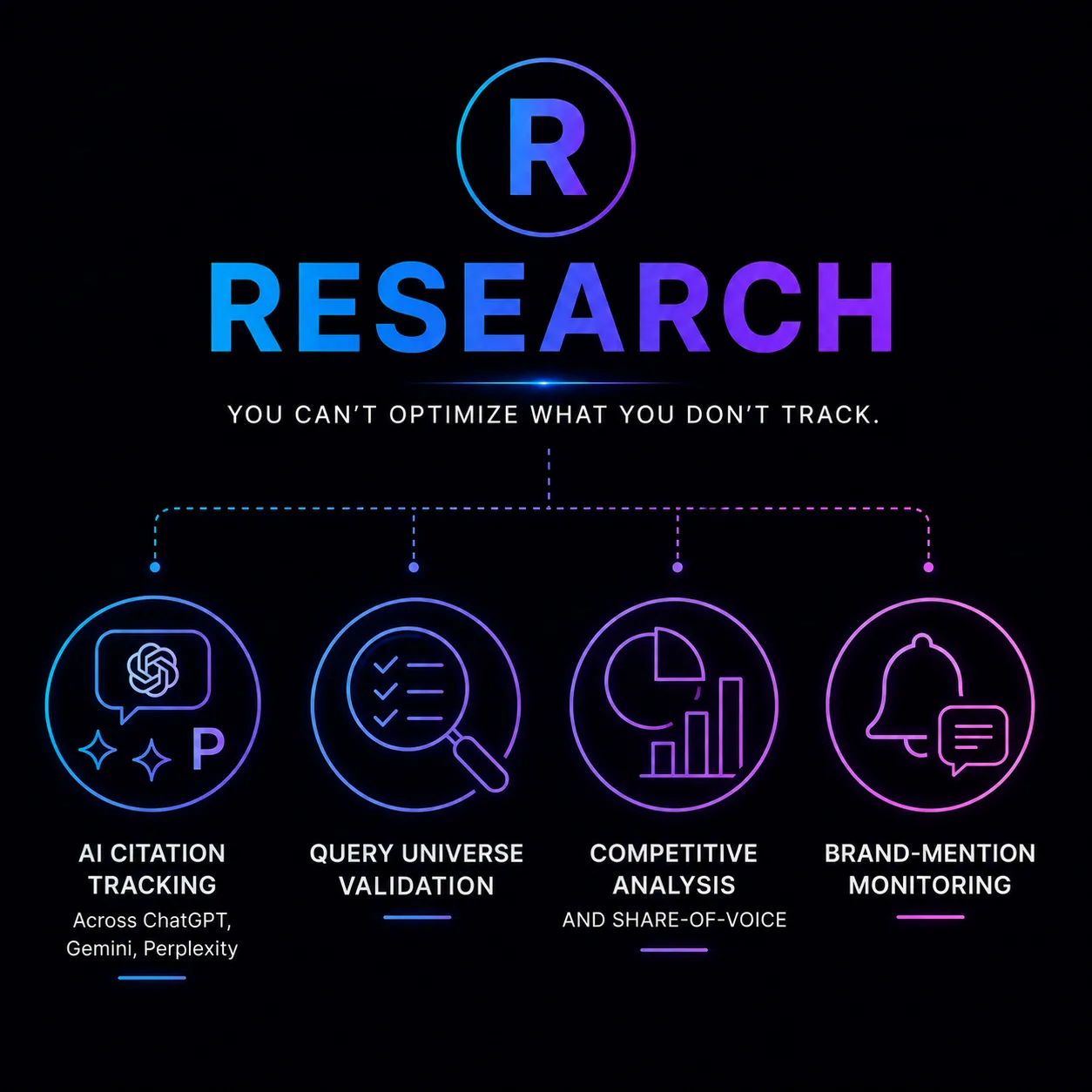
Research
Measure what AI says about your brand before trying to improve it.
AEO without measurement is guesswork. Research is the intelligence layer that tells you which queries AI answers with your brand, which with competitors, and what the delta looks like week over week. AI citation tracking, query universe validation, competitive share-of-voice analysis, and brand-mention monitoring form the data spine that every other pillar runs on.
- AI citation tracking across ChatGPT, Gemini, Perplexity
- Query universe validation
- Competitive analysis and share-of-voice
- Brand-mention monitoring
Audience
Give AI proof, from sources it already trusts, that your brand is worth recommending.
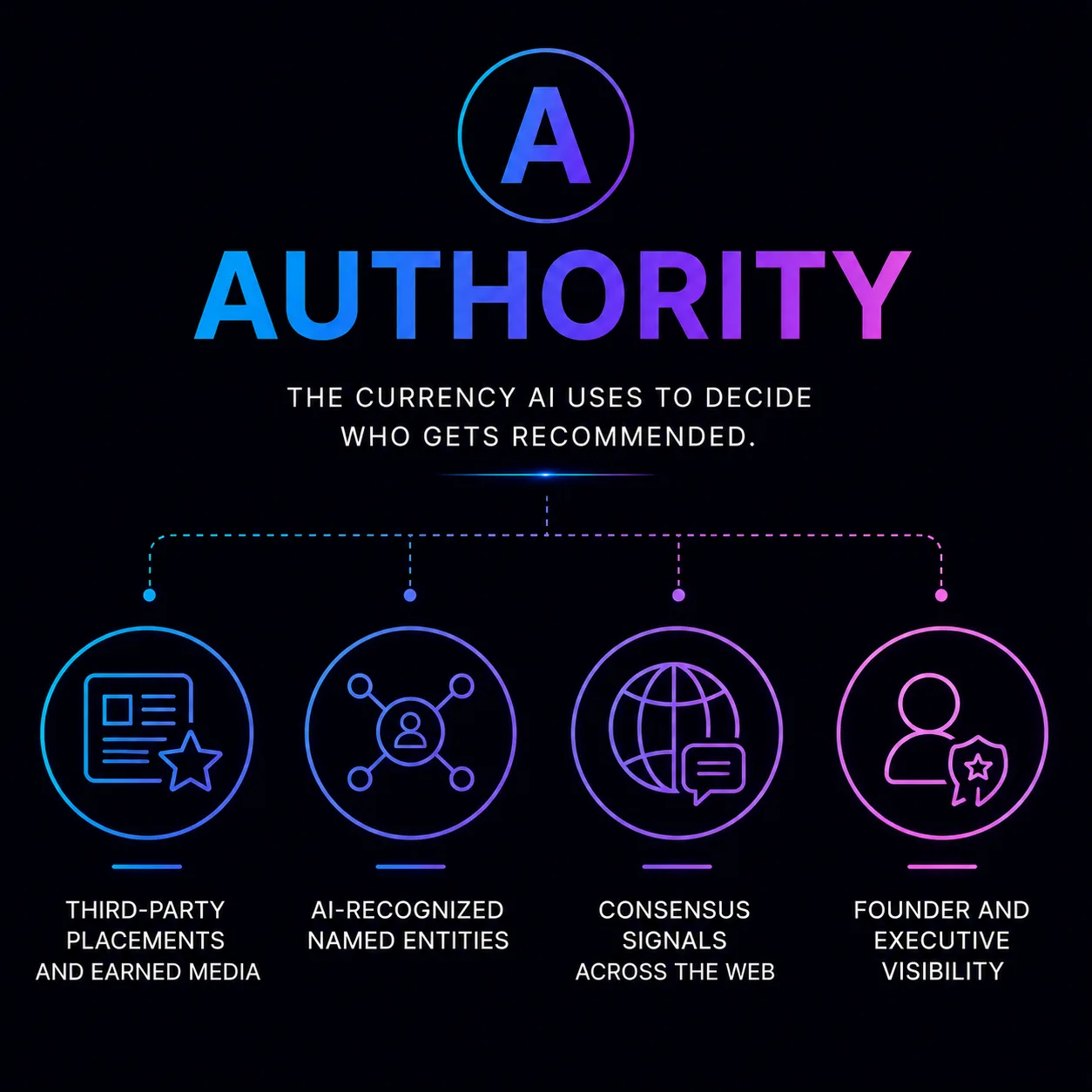
If ChatGPT is going to recommend your brand to a user, it needs to trust you across an ecosystem of third-party signals — not just your own site. Audience in the B.R.A.I.N. framework encompasses third-party placements, AI-recognized named entities, consensus signals across publications and communities, and founder visibility. ~50% of an answer's trust budget is spent on third-party validators before the AI ever visits your domain.
- Third-party placements and earned media
- AI-recognized named entities
- Consensus signals across the web
- Founder and executive visibility
Indexability
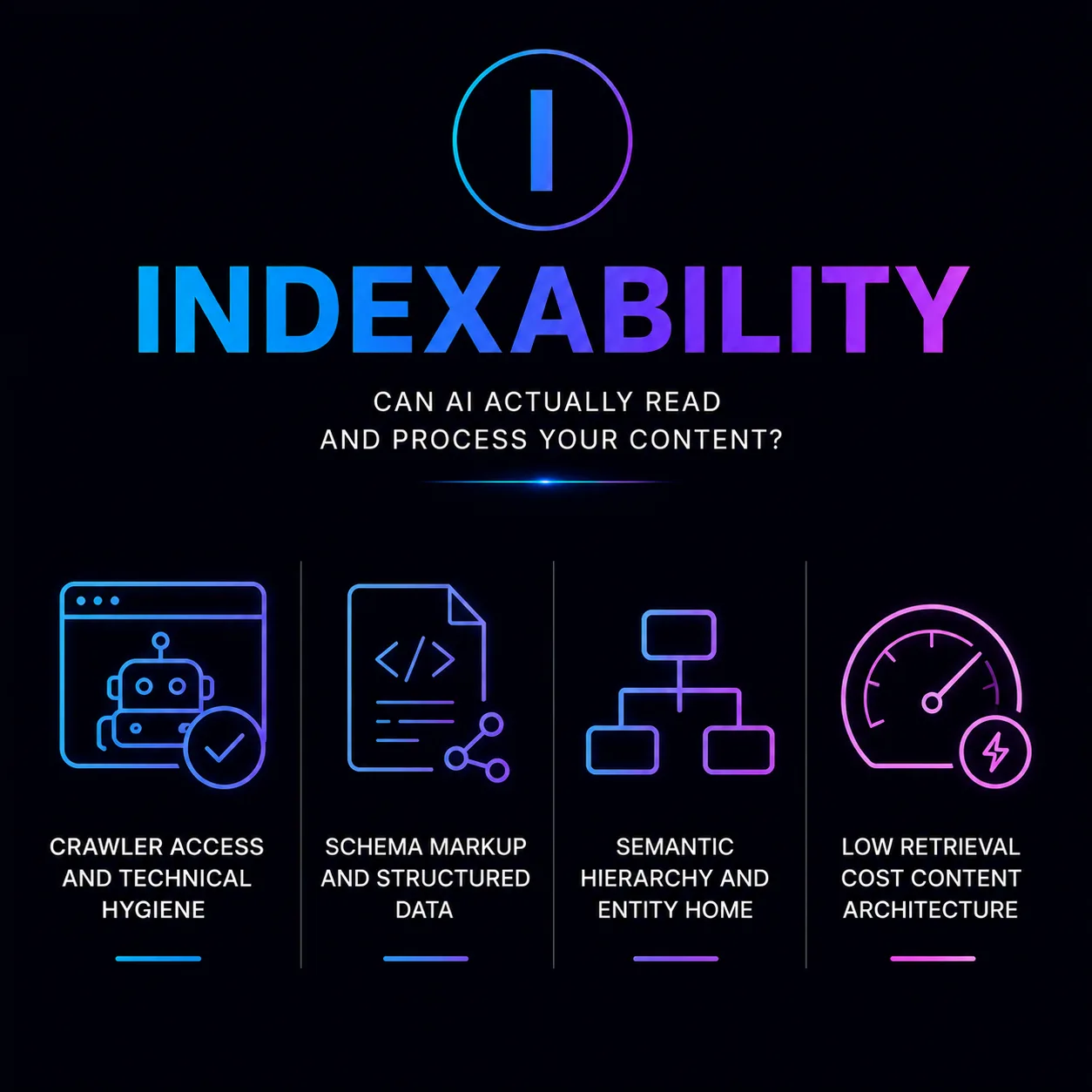
Make your website easy for AI to read, understand, and quote.
Indexability is the technical pillar — focused on minimizing retrieval cost for AI crawlers. Schema markup, semantic HTML hierarchy, crawler access, and a clean Entity Home ensure that when the machine visits your site, it spends its limited retrieval budget on your most authoritative content. If a machine can't verify you in under 200ms, you don't exist in the answer set — no matter how much SEO traffic you used to win.
- Crawler access and technical hygiene
- Schema markup and structured data
- Semantic hierarchy and Entity Home
- Low retrieval cost content architecture
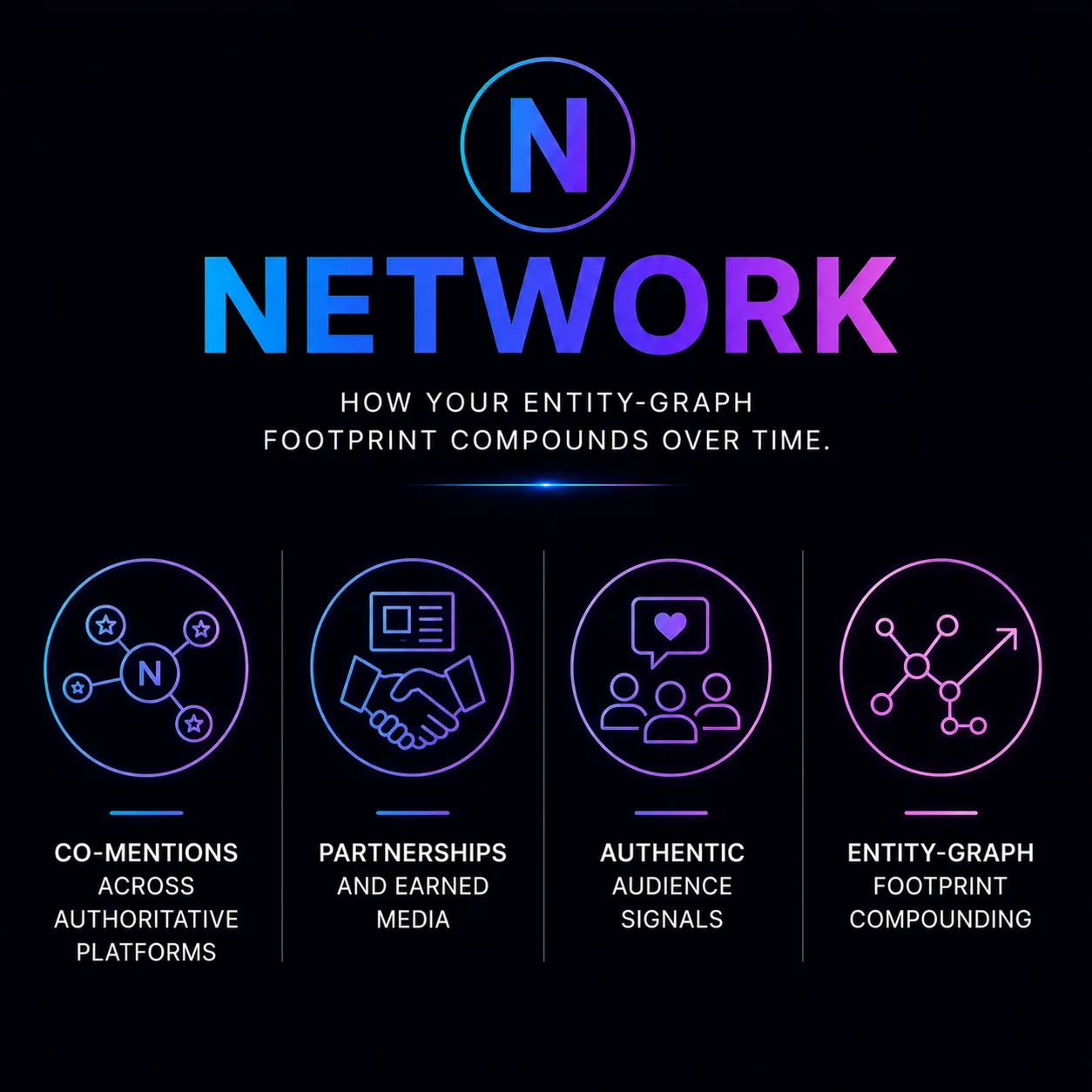
Network
Get mentioned in more of the places AI learns from, so trust compounds.
An isolated piece of content rarely moves the needle for AI citation. Network is about building a dense web of co-mentions, partnerships, earned media, and authentic audience signals that all reinforce the same core entities. Co-mentions replace traditional backlinks as the currency of AI trust. When multiple authoritative sources independently mention your brand in the same context, the machine's confidence in recommending you compounds.
- Co-mentions across authoritative platforms
- Partnerships and earned media
- Authentic audience signals
- Entity-graph footprint compounding
The framework connects to everything
Each pillar maps to deep-dive resources and concepts across the AI Visibility Knowledge System.
Explore the concepts
The pillars in depth, connected to the resources where they come to life.
Resources educate. The community implements.
Resources teach the what and the why. The community is where you put it into practice — alongside founders building AI visibility together.